Wednesday, December 13, 2017


Dawn Eastman, bestselling author of the cozy series Family Fortune, talks about her newly released traditional mystery.

Related image
Dawn Eastman

CQ: Congratulations on the December 12 release of your new mystery novel, Unnatural Causes. This is the first in an anticipated series. Tell us about your protagonist.

DE: Thank you! My protagonist, Katie LeClair is a new doctor, fresh out of residency. She takes a position in a father-son family practice in a small town. She has led an itinerant lifestyle and now wants to settle in one place and make a home for herself.

CQ: This new novel is a change of pace from your previous cozy mystery series, Family Fortune.
Would you agree that Unnatural Causes could be characterized a suspense novel? If you do, why the change of pace in your writing career? And what do you think are the expectations of readers of suspense versus cozy mysteries?

Image result for dawn eastman, unnatural causes
DE: I wouldn't characterize it as a thriller. It is more of a traditional mystery. My cozy mystery series is quirky with quite a few unusual characters. There is often mayhem. In the new series, with a doctor as the main character, the quirkiness is toned down, and there is not as much mayhem.

CQ: What are you currently working on? The second novel in the Dr. Katie LeClair series? A fifth novel in the Family Fortune series? Can you discuss what your next novel is about?

DE: I just turned the second Katie book into the editor. It focuses on a patient released from prison. He was convicted of murder/manslaughter but tells Katie he was innocent. She, of course, wants to investigate. I have also started work on the fifth Family Fortune mystery, which I hope to finish early in the new year.

CQ: Who and what have most influenced your writing?

DE: I have always been a reader, and that first pushed me to want to write. Once I realized at about age seven that writers were real people, I wanted to be one of them. Mysteries are my favorite, and I love a good puzzle, so I was drawn to the cozy and traditional sub-genre. Janet Evanovich is one of my favorite authors of comedic mystery. I love the humor mixed with the more serious criminal element. I also read Margaret Maron, Laurie King, Rhys Bowen, Susan Wittig Albert, Deborah Crombie, Elly Griffiths, and many more. My writing group has been a huge influence on my writing in the sense that they were so encouraging pre-publication and kept me accountable so that I actually finished a book!

CQ: What books and authors are you currently reading?

DE: Currently, I am reading everything Elly Griffiths has written. She has a great mix of humor with serious issues. Her cast of characters is just quirky enough to believe that they are real. Also, I am catching up with the Deborah Crombie series. I just started reading her books, and I have many hours of enjoyment to look forward to – I think she is on book fifteen or so! And I have Louise Penny’s latest on my desk. I’m waiting until I have a couple of days to focus. I usually can’t put her books down for long.

CQ: Have any of the books you’ve read over the years inspired your own writing? How?

DE: The Harry Potter series inspired me in the sense that the world is so real, so well thought out, and it was a world that readers wanted to live in. I often thought of how wonderful it must be to spend even more time in that world while working on the novels. I set my books in places where I would like to spend a lot of time. And as I mentioned, any books that combine humor with mystery have inspired me to try my hand at creating my own. Rhys Bowen's Royal Spyness series is wonderful that way. I also enjoy MC Beaton's Agatha Raisin. Elly Griffiths has inspired me to try to add depth and a more fully realized group of characters to the humorous elements. She uses humorous points of view and less situational comedy to great effect.

CQ: What do you do when you’re not writing?

DE: I have two kids who are fairly independent and one dog who is very needy. I also knit a lot and watch British television. Currently, I'm hooked on The Crown (which is maybe not technically British TV but is about the monarchy). And I read, all the time.

CQ: Thank you for a great interview. And best of success with your new novel.

Monday, November 27, 2017

A Taste for Historical Mysteries


Among my favorite forms of mystery novels is the historical mystery and if you, too, enjoy reading mysteries set in years past then we share a sense of gratitude to the author Ellis Peters, the pen name for British writer Edith Pargeter, whose work redefined and breathed new life into the form.
Related image
Ellis Peters

Peters wrote ninety books in her lifetime, but it was her Brother Cadfael series, featuring a 12th-century Benedictine monk, which built a worldwide audience for historical mysteries.

In the twenty novels in the series, Brother Cadfael uses his finely honed skills as an herbalist at Shrewsbury Abbey to solve murders and other crimes during a tumultuous period of civil war in England. 

The first book in the series, A Morbid Taste for Bones, was published in 1977. And Peters continued to write Cadfael novels until her death in 1995 at the age of eighty-two.

Other novelists have followed in her path, notably Anne Perry, writer of the Charlotte and Thomas Pitt series set in Victorian England and Caleb Carr, whose novels The Alienist and The Angel of Darkness, are set in 19th century New York.

Related image
Derek Jacobi
The Cadfael series brought Peters acclaim from reviewers as well as prestigious literary awards. She received the Silver Dagger award of the British Crime Writers Association in 1980 for Monk’s Hood, her third Cadfael novel. Many of the novels were adapted for television in the 1990s with award-winning British actor Derek Jacobi in the lead role.


Peters was mostly self-educated, never having attended university. She drew on meticulous research to realistically evoke life in the 12th century as well as her knowledge and experience working as a chemist’s assistant to create the ointments, balms and other remedies Cadfael administers to his patients.

The Complete Brother Cadfael Series

A Morbid Taste for Bones (1977)
One Corpse Too Many (1979)
Monk’s Hood (1980)
Saint Peter’s Fair (1981)
The Leper of Saint Giles (1981)
The Virgin in the Ice (1982)
The Sanctuary Sparrow (1983)
The Devil’s Novice (1983)
Dead Man’s Ransom (1984)
The Pilgrim of Hate (1984)
An Excellent Mystery (1985)
The Raven in the Foregate (1986)
The Rose Rent (1986)
The Hermit of Eyton Forest (1987)
The Confession of Brother Haluin (1988)
A Rare Benedictine (1988)
The Heretic’s Apprentice (1989)
The Potter’s Field (1989)
The Summer of the Danes (1991)
The Holy Thief (1992)
Brother Cadfael’s Penance (1994)

Who Invented the Historical Mystery?

Lillian de la Torre, an American writer with master’s degrees from Columbia and Harvard, is credited with creating this sub-genre. De la Torre wrote a series of detective stories beginning in the 1940s casting the eighteenth-century literary figure Samuel Johnson as a sleuth with help from James Boswell, his biographer. The Detections of Dr. Sam Johnson includes a compilation of eight stories.


Tuesday, October 3, 2017

The Navajo Mysteries of Tony Hillerman

Tony Hillerman was a mystery author with a mission: to write suspense novels that showcase tribal cultures of the Southwest, little known to the wider American audience. He masterfully succeeded in his eighteen novels featuring Navajo Tribal police’s Lt. Joe Leaphorn and Sargent Jim Chee.
Image result for tony hillerman
Tony Hillerman

His first book in the series, The Blessing Way, was published in 1970 and his last, The Shape Shifter in 2006, two years before his death at 83. In between some of his best mystery novels include A Thief of TimeTalking God and Coyote Waits. In 1974 Hillerman won the Edgar Allan Poe award for best mystery for his novel Dance Hall of the Dead (1973). And in 1991 the Mystery Writers of America honored him with its Grandmaster Award.

A former newspaper editor, Hillerman was a prolific writer, in both fiction and non-fiction, but it was the Leaphorn/Chee mystery series that brought him international fame and secured his recognition by the Navajo Nation as a Special Friend of the Dineh (the Navajo).

Each Leaphorn/Chee novel captivates readers with intriguing, intricate plots, the gritty realism of reservation life among the Navajo, Hopi and Zuni tribes, and the impact of the vast expanse of the Southwest desert and sky on Native American character and culture.

Hillerman’s two Navajo protagonists have richly honed characters, distinct but complementary. Leaphorn is older, college-educated, and knowledgeable about mainstream white culture. Chee is younger with a deep connection to the Navajo way and ambitions to become a medicine man. He is continually puzzled by the white culture.

Early in life, Hillerman developed a first-hand understanding of native tribes. He grew up poor in Oklahoma on the territorial land of the Potawatomi and attended school among the tribe’s children. He drew a crucial cultural distinction between Native Americans and whites during a 2002 interview on the Paula Gordon Show, produced on the Internet by the Clarion Group Live. Hillerman said that during droughts Oklahoma farmers prayed for rain, while the tribes prayed instead to be in harmony with the weather, seeing themselves as part of nature, not distinct from it.

No other author wrote as honestly and respectfully of American Indian culture. And readers of Hillerman’s mystery novels can experience an immersion into Navajo culture as rewarding as the solutions to his intelligent, interwoven plots.


A complete list of Hillerman’s Navajo mystery series.

The Blessing Way (1970) 
Dance Hall of the Dead (1973)
Listening Woman (1978)
People of Darkness (1980),
The Dark Wind (1982)
The Ghostway (1984)
Skinwalkers (1986)
A Thief of Time (1988)
Talking God (1989)
Coyote Waits (1990)
Sacred Clowns (1993)
The Fallen Man (1996)
The First Eagle (1998)
Hunting Badger (1999)
The Wailing Wind (2002)
The Sinister Pig (2003)
Skeleton Man (2004)
The Shape Shifter (2006)

Wednesday, September 27, 2017

Quotable Quotes

Sara Paretsky on the origins of her popular character VI Warshawski.

“I thought it was time for a tough, smart, likable female private investigator, and that's how VI came to life.” 


Sara Paretsky
Sara Paretsky

Friday, September 22, 2017

Quotable Quotes on Crime Fiction


Arthur Conon Doyle From “The Adventure of the CopperBeeches"


Product Details"It is my belief, Watson, founded upon my experience, that the lowest and vilest alleys of London do not present a more dreadful record of sin than does the smiling and beautiful countryside.” 


Tuesday, September 5, 2017

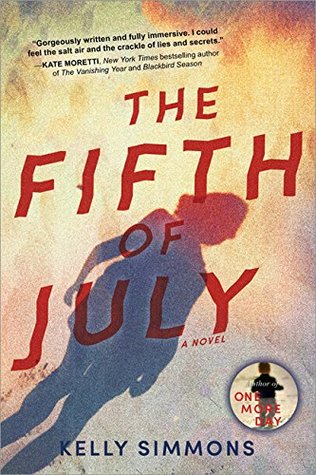
Author Kelly Simmons: Mysteries within Families

Writer Kelly Simmons, the author of four novels including the recently released The Fifth of July, and One More Day (2016), discusses the influences that inspire her stories of family drama wrapped within mysteries.

https://static1.squarespace.com/static/55426290e4b0175bb0983d2a/t/5544ca7ce4b0b069d9b7f922/1430571699695/-1.jpg?format=1000w
Kelly Simmons


Chris Quarembo: Congratulations on the release of your novel, The Fifth of July. The setting is Nantucket which is as much a character as the men and women who relate the story. When you were initially developing this novel was the setting or the human characters the main impetus for your writing?
Kelly Simmons: While the setting was important to the story – the real estate battles, the wealth, the magnetic beauty of the beaches—it was the characters who spoke to me first. Specifically, I loved the idea of viewing houses and inhabitants from the points of view of the caretaker and the housekeeper. I have a very close friend who has a caretaking company on the island, and his stories amused me and inspired me.
CQ: Your use of five characters each telling the story from their point of view gives a Rashomon effect to the novel. Do you think truth is malleable?
KS: I believe people remember things completely differently and assign competing weights to the same actions or events. Particularly with siblings or spouses --  the same facts are burnished to a shine or allowed to rust and drop away. That is true in most of my novels, and particularly in this one. 
CQ: The Fifth of July and your previous novel One More Day have an underlying mystery but are chiefly about family relationships. Why this unique and satisfying combination?
34006779KS: It took me quite a few years of writing to understand that I am obsessed with family secrets and community crimes and that my strength lies in that combination. This obsession was definitely shaped by events in my childhood--– I was stalked by a Peeping Tom, we had a car thief in the family, a classmate’s sister was kidnapped and killed, and a boy on my street tortured animals and set things on fire. Just your usual Mayberry RFD! I was a very curious kid who noticed everything, and these experiences affected me more than I realized.
CQ: Do any books stand out to you as being influential in your writing?
KS: I admire F. Scott Fitzgerald’s The Great Gatsby, and re-read it frequently. But most of my influences, I believe, come from the female writers I have read deeply, and most of them are named Ann – Ann Beattie, Ann Tyler, Ann Patchett. I’m also fond of Janes – Jane Hamilton, Jane Smiley.
CQ: Are you currently working on another novel? And what can you tell us about it?
The first draft of my next book is about two-thirds complete – which means I’m deep in the hard part, locking things down, making sure the plot points make sense. (Then the fun part comes – making all the language prettier!) It’s about a female fugitive forced to take her teenage daughter on the run -- but the daughter has other ideas about meeting the family that’s been hidden from her. I’m excited about it. It’s new territory because it’s not quite as dark as my other work. I’ve gone soft!
CQ: When you’re not writing, what do you most enjoy doing?
KS: I love to dance, do yoga, and ride my bike. And read. And watch movies. And eat. But I also really enjoy writing, which is why I do it. 
CQ: Thank you so much for joining me. Best of success with The Fifth of July and I’ll be watching for the release of your next novel.

Tuesday, July 18, 2017

Paul Vidich: Creator of Cold War Spy George Mueller


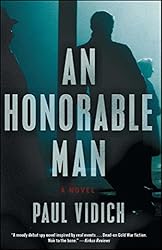
Interview with Author of An Honorable Man

Chris Quarembo: What or who was your inspiration for creating the character of George Mueller? In some reviews, he’s described as a likable but reluctant spy. He’sdefinitely a loner and in your debut novel, An Honorable Man, Mueller says that “friendship is a dangerous luxury.”

Related image


Paul Vidich: Finding the voice for George Mueller, the protagonist in my first novel and the second, The Good Assassin, was key to unlocking each story. This character came to me through an abiding family tragedy that had sat unsettled in my mind for many years.
My uncle Frank Olson was a highly skilled Army scientist who worked at Fort Detrick in Frederick, Maryland, a top secret U.S. Army facility that researched biological warfare agents. He couldn’t talk to his wife about his work, and he couldn’t share his concerns with colleagues, who might question his loyalty. He was trapped in a moral maze. He died sometime around 2:30 am on November 28, 1953, when he “jumped or fell” from his room on the thirteenth floor of the Statler Hotel in New York City. He had gone to New York to see a psychiatrist in the company of a CIA escort. This was all the family knew about Frank’s death for twenty-two years.
An Honorable Man: A Novel
I researched the case and came across a mention of the mysterious case of James Kronthal, the first Soviet mole in the CIA, a close associate of Alan Dulles, who committed suicide in 1953. The incident intrigued me. I created a story line around the incident. I had already explored a man who lived a secret life – Frank Olson – so I took the essence of Frank’s life and used it to create a fictional character, George Mueller. I knew the life of a man cut off from family by covert work. When I set down to write the first draft these things were in my mind, so the draft, sloppy and uneven, come quickly. But I had found a character with a voice that interested me. 

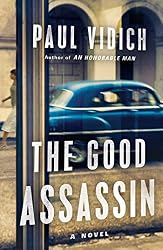
CQ: Your novels are set in the 1950s. An Honorable Man takes place during the McCarthy era in Washington, D.C. In The Good Assassin, you take readers to pre-Castro Cuba. What was your inspiration for this story?
PV: I was casting about for a character around which I could build my second novel when my wife handed me a New Yorker article about an American who played a small part in the Cuban Revolution in 1958. William Morgan was a U.S. citizen who led rebels of the Second Front that drove the Cuban army from key positions in the central mountains, helping Fidel Castro's forces defeat President Fulgencio Batista’s army.
Morgan was among two dozen U.S. citizens who fought in the revolution, and one of only three foreign nationals (another was Argentine Che Guevara), to rise to the army’s highest rank, comandante. I was intrigued by this man. Morgan’s short, tumultuous life inspired the character Toby Graham in the novel.
Morgan arrived in Cuba in December 1957 when Fidel Castro’s July 26th Movement had established itself as a small but effective opponent to Batista’s corrupt regime. Like many Americans, Morgan was drawn to Cuba after reading New York Times’ reporter Herbert Matthews’s front page account of meeting Castro in the Sierra Maestra Mountains and his romanticized description of the bearded six-foot tall revolutionary who was “an educated, dedicated fanatic, a man of ideals, of courage,” who had “strong ideas of liberty, democracy, and social justice.”
The Good Assassin: A Novel
Morgan was a big, flamboyant man, who came of age in the Cold War, and like an earlier generation of young men who volunteered for the Republican cause in the Spanish Civil War, he wanted to make a difference in the world. He found his cause in Cuba’s struggle. Morgan served under Castro until he was accused of being a CIA spy. After a brief trial he was executed at dawn on March 11, 1961 in La CabaƱa, the eighteenth-century stone fortress that overlooks Havana Harbor. He was thirty-two.

CQ: What will readers learn about George Mueller in your new novel that they didn’t know from reading your debut work?
PV: Mueller, a single man in the earlier novels, has married and has a child. He struggles with the tension between the secrecy of his job, and the openness that healthy family relationships require.

CQ: Your very favorable Kirkus Review states that An Honorable Man is noir to the bone. Do you agree with that analysis of your work?
PV: The tag line ‘noir to the bone’ has appeal, but it wasn’t how I thought of my writing. I had to reread the book to see what the reviewer referred to. I try to write elegantly and sparingly, except where the rhythm of a scene is served by longer sentences. I took it as a compliment.

CQ: What are you currently working on? Will there be another novel in the George Mueller series?
PV: The new novel is set in 1975. President Ford had assumed the presidency under the 25th Amendment in August 1974, when Nixon resigned, and the CIA complicity in Watergate turned Congress against the Agency. The book is set in this tumultuous year – Saigon falls in the Spring, Ford struggles with popularity, the CIA is demoralized.

CQ:  What books are you currently reading?
PV: I read widely. My to-read stack includes Joseph Kanon’s new book, Defectors, Richard Lange’s new book, The Smack, and Shakespeare’s play, Measure For Measure, a brilliant play about justice and mercy.

CQ: Do any books stand out over the years as being inspirational for your own writing?
PV: Jane Eyre by Charlotte Bronte’s is a remarkably confident work. Le Carre’s The Spy Who Came in From The Cold, ushered in a new chapter is espionage fiction. Eric Ambler’s A Coffin For Dimitrios is required reading for anyone interested in good writing and strong story telling. It had a big influence on Graham Greene, whose book, The Quiet American, is also a favorite of mine.

CQ: When you’re not writing, what do you enjoy doing?
PV: My wife and I go to the theater a great deal. I am an angel investor in technology startups, which require some time, and I have two grandchildren who I help care for on weekends.